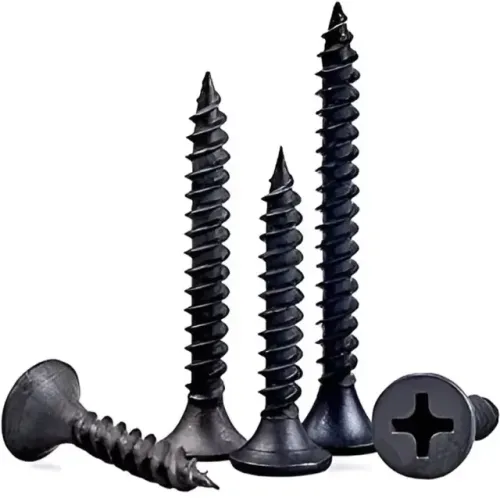
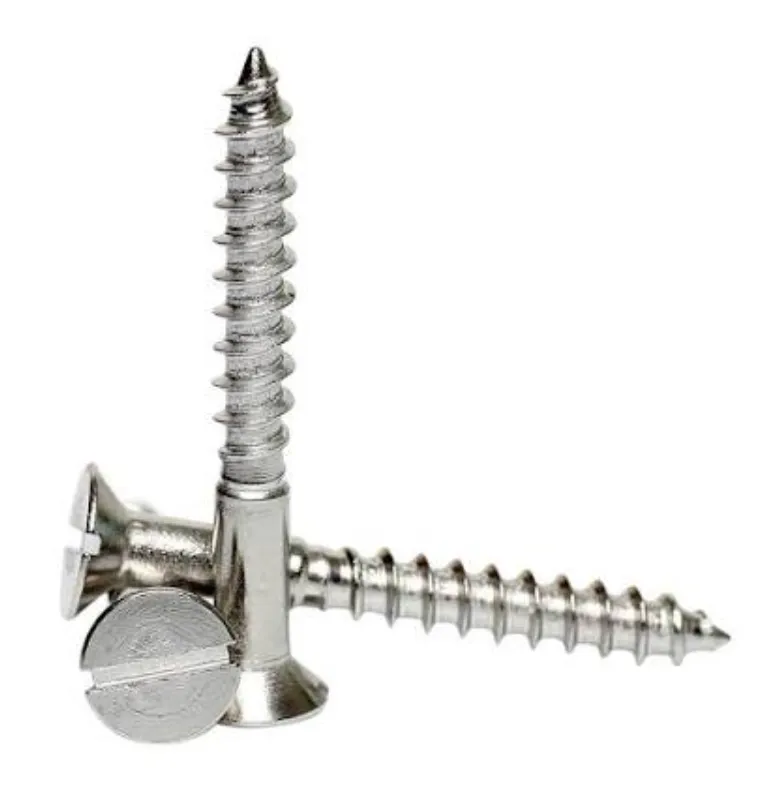
A screw used in timber or engineered wood has to do more than simply hold two pieces together. It needs to enter the material effectively, develop suitable holding strength, and create a connection without unnecessarily damaging the surrounding surface.
That makes the selection of Wood Screws particularly important for furniture manufacturers, carpenters, contractors, interior fabricators, and hardware buyers working across Pune and other industrial areas of Maharashtra.
Why wood screw design is different
Wood is not uniform in the way manufactured metal components are. Density, grain direction, moisture, thickness, and board composition can influence how a screw performs.
A screw that works well in one material may behave differently in hardwood, softwood, plywood, or another board product.
The thread pattern, point design, shank, head, diameter, and length should therefore be considered in relation to the actual material being assembled.
Length affects the quality of the connection
A screw needs sufficient engagement in the receiving material to create a useful hold. However, simply choosing the longest screw available is not the answer.
Excessive length may cause the point to emerge from the opposite surface, interfere with another component, or create difficulties in thin furniture sections.
Before selecting a length, consider:
- Thickness of the first component
- Depth available in the receiving material
- Expected load on the joint
- Whether the finished surface must remain clean
- Location of nearby fittings or hardware
A sample assembly can be useful before a large production batch begins.
Head style influences the finished result
Furniture and interior applications frequently have visual requirements in addition to structural requirements.
Some screw heads are designed to sit relatively flush with the surface, while others remain visible or provide a particular bearing area. The correct choice depends on whether the screw will be concealed, covered, countersunk, or intentionally exposed.
The driver interface is also worth considering. Production teams using power tools generally need a screw and bit combination that supports efficient installation without frequent slipping or head damage.
Preventing splitting requires more than changing the screw
Splitting near an edge is a familiar problem in woodworking.
It can be influenced by screw diameter, material density, distance from the edge, pilot-hole preparation, installation speed, and the design of the screw itself.
If splitting occurs repeatedly during production, it is worth reviewing the entire fastening process rather than assuming the material is always responsible.
A pilot hole may be appropriate in certain applications, particularly with harder materials or locations close to an edge.
Avoid treating every board as solid wood
Furniture production increasingly involves plywood, particle board, MDF, laminates, and engineered panels.
These materials have different internal structures. Consequently, a traditional screw chosen for solid timber should not automatically be assumed to be the ideal solution for every board.
Chipboard applications, for example, may benefit from screws designed specifically for engineered particle-based boards.
Understanding this distinction can improve assembly consistency and reduce damaged panels.
Think about production efficiency too
For manufacturers handling repeated assembly work, installation characteristics matter.
A suitable screw can help operators achieve predictable insertion, consistent head seating, and reliable engagement. In contrast, an unsuitable screw may contribute to stripped heads, damaged boards, rework, or slower production.
Businesses in Pune's furniture manufacturing, fabrication, construction, and interior contracting sectors can therefore benefit from standardizing screw specifications for frequently manufactured products.
Specify before ordering
Rather than requesting only wood screws, procurement teams should communicate useful information such as required dimensions, head type, finish, quantity, and application.
Saif Nut Bolt and Hardware works with industrial and commercial buyers seeking screws and fastening hardware in Pune. Clear application information can make product selection more efficient, particularly when buyers are comparing several sizes or types.
Wood screws are small components, but repeated fastening errors can affect both appearance and production efficiency. Choosing them according to the material, joint design, available thickness, and installation method creates a more dependable approach than selecting primarily by size or price.
Keywords