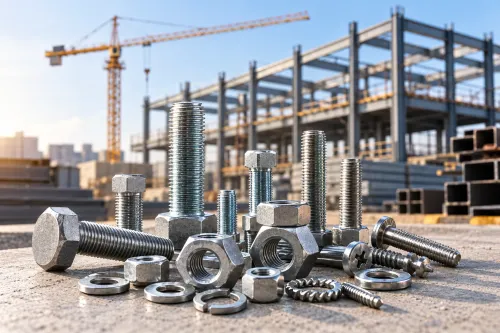
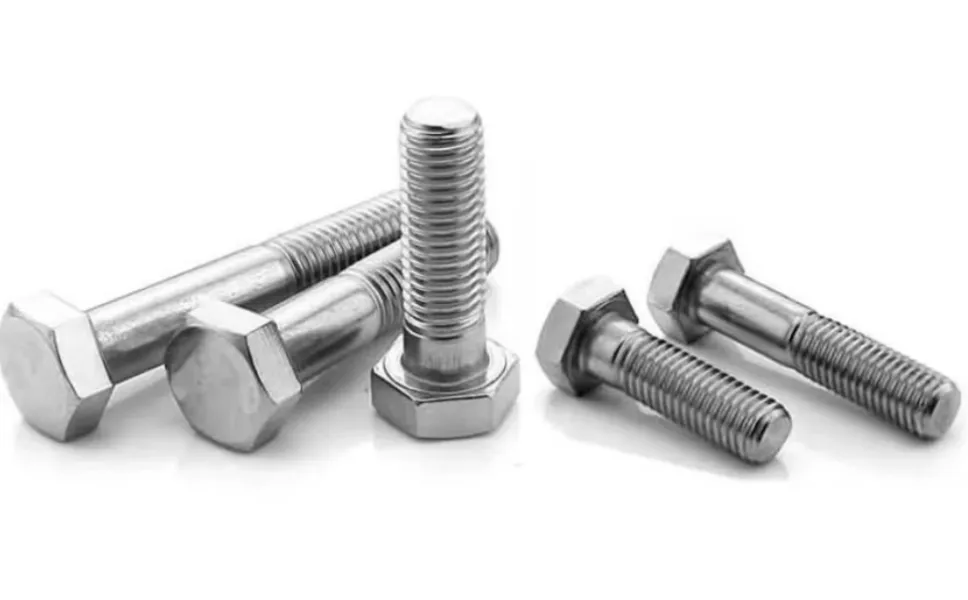
A hex head bolt is one of the most recognizable industrial fasteners, yet specifying it correctly involves more than providing a diameter and length. Material, grade, thread pitch, finish, and installation requirements can all influence whether the bolt is suitable for the intended assembly.
For engineering and procurement teams, understanding these specifications before placing an order can prevent mismatches and simplify supplier evaluation.
Why Hexagonal Heads Are Widely Used
The six-sided head provides convenient engagement with standard spanners, sockets, and other installation tools.
Hex head bolts are used across:
- Machinery
- Fabricated structures
- Equipment frames
- Construction assemblies
- Automotive components
- Industrial installations
- Maintenance operations
Their versatility comes from the broad range of sizes, materials, grades, and finishes available.
Diameter Is Only the Starting Point
A designation such as M10 identifies a nominal metric thread diameter, but it does not provide every detail needed for procurement.
A complete specification may also need:
- Bolt length
- Thread pitch
- Threaded length
- Strength grade
- Material
- Finish
- Applicable standard
Two bolts that look nearly identical may differ significantly in mechanical properties.
Thread Pitch Must Match
Metric fasteners can be available with different pitches.
If a maintenance team orders the correct diameter but incorrect pitch, the bolt may not fit the existing nut or tapped component.
Never force a bolt that does not thread smoothly. Doing so can damage both components.
For replacement applications, procurement teams should confirm the original specification rather than relying solely on visual measurement.
Strength Grades Should Be Understood
Bolt markings can indicate mechanical property classes.
The required grade depends on joint design and engineering requirements. Structural, machinery, and high-load applications may have specific requirements that should not be substituted casually.
A stronger bolt is not automatically appropriate for every joint. The mating nut, connected materials, tightening method, and design assumptions should also be compatible.
Fully Threaded and Partially Threaded Bolts Serve Different Needs
Another frequently overlooked detail is the threaded portion.
A fully threaded bolt has threads extending over most or all of its shank. A partially threaded bolt includes an unthreaded section beneath the head.
The appropriate choice depends on the joint configuration and engineering design.
Procurement specifications should therefore state the required configuration rather than assuming suppliers will interpret it automatically.
Surface Finish Should Match Exposure
Fasteners may be supplied with different coatings or finishes depending on their intended use.
When selecting a finish, consider whether the assembly will operate:
- Indoors
- Outdoors
- In humid conditions
- Near chemicals
- At elevated temperatures
- In corrosive environments
Corrosion resistance requirements should be established according to actual service conditions.
Check Tool Accessibility
The hexagonal head requires sufficient clearance for a socket or spanner.
In compact machinery, access can become a practical design consideration. A technically suitable bolt is not helpful if installation or maintenance tools cannot reach it properly.
Design engineers should therefore evaluate fastening access during product development rather than discovering the problem during assembly.
Create a Procurement Checklist
Before sending an enquiry for hex bolts, verify:
- Nominal diameter
- Length
- Thread pitch
- Threaded configuration
- Material
- Strength grade
- Finish
- Quantity
- Relevant standard
- Application requirements
This information allows suppliers to identify the requirement more accurately.
Why Documentation Matters
Industrial businesses often reorder the same fasteners repeatedly.
Recording approved specifications creates consistency between procurement cycles and reduces dependence on individual staff knowledge.
A fastener master list can be maintained for machinery, fabrication, maintenance, and project requirements.
This is particularly useful for Pune-based engineering and manufacturing businesses managing multiple vendors and production lines across Maharashtra.
Saif Nut Bolt and Hardware supplies hex head bolts and related industrial fastening products for engineering, fabrication, construction, and manufacturing requirements.
The key lesson is straightforward: never purchase hex bolts based only on approximate size. A complete technical specification makes procurement more reliable and helps ensure that the supplied fastener is compatible with the intended joint.
Keywords