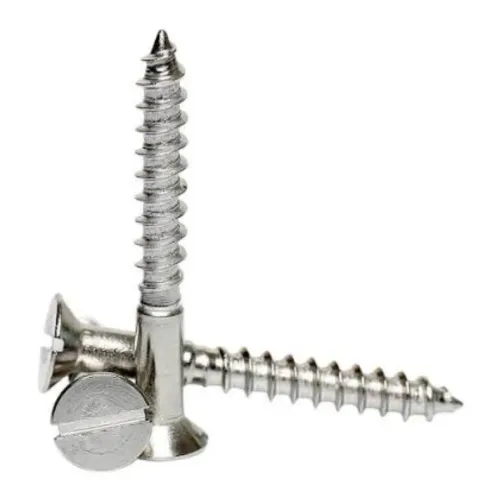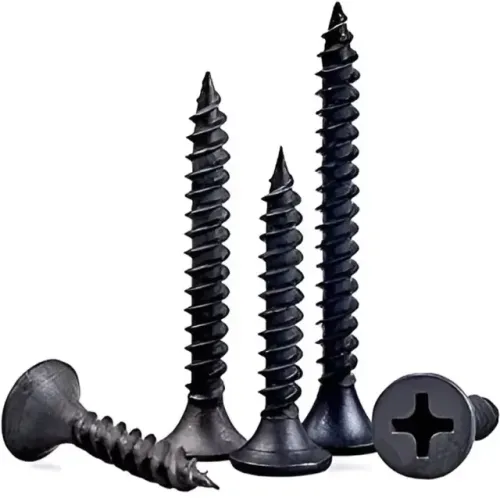
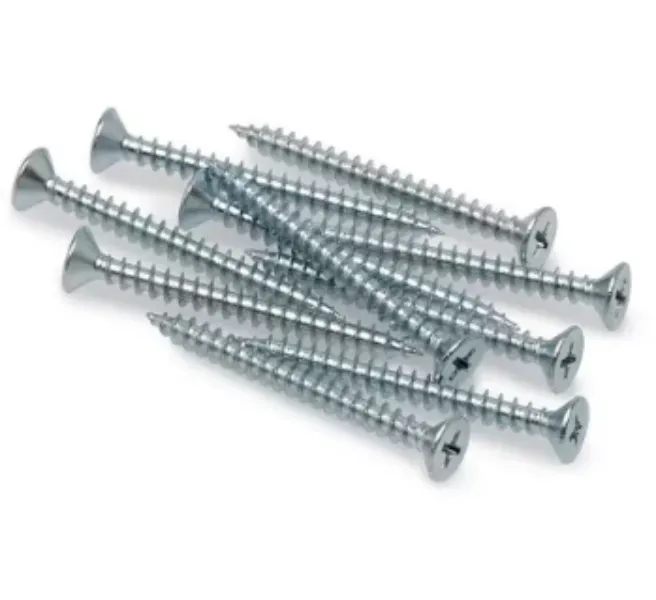
Furniture production depends heavily on small components that customers may never see. Among them, the chipboard screw plays an important role in assembling particle board, engineered wood, cabinets, modular furniture, shelving, and interior fixtures.
Selecting the correct screw helps create consistent joints while reducing avoidable board damage and assembly difficulties.
What Makes a Chipboard Screw Different?
Chipboard and particle board are manufactured from compressed wood particles combined with binders. Their internal structure differs from solid timber.
A screw intended for engineered boards therefore needs suitable thread geometry and dimensions to engage the material effectively.
Chipboard screws are commonly used where manufacturers need efficient fastening in materials such as:
- Particle board
- Chipboard
- MDF in suitable applications
- Engineered wood panels
- Cabinet components
- Modular furniture
- Shelving units
- Interior fixtures
Actual suitability should always be confirmed according to board density and joint design.
Thread Design Influences Holding Performance
The thread is one of the most important parts of the screw.
A suitable thread helps engage the board material while the screw is driven. Incorrect thread geometry or dimensions may result in weak engagement, stripping, or board damage.
Furniture manufacturers should consider screw diameter, thread pattern, length, and head configuration rather than treating all wood-related screws as interchangeable.
Screw Length Requires Careful Selection
Using the longest available screw does not automatically create a stronger connection.
An excessively long screw may emerge through the opposite face of a panel. A screw that is too short may provide insufficient engagement.
The appropriate length depends on:
- Thickness of the first component
- Thickness of the receiving board
- Required penetration
- Joint configuration
- Hardware being attached
For standardized furniture production, defining approved screw lengths for each assembly point can reduce operator errors.
Head Type Affects the Finished Assembly
Furniture fasteners often need to sit neatly within the finished product.
Depending on the design, the screw head may need to sit flush with the surface, remain accessible for servicing, or work with specific fittings.
The driver recess should also match production tooling.
A poor tool-to-screw fit can cause cam-out, damaged screw heads, slower assembly, and inconsistent installation.
Pilot Holes May Still Be Useful
Some screws can be driven directly into suitable engineered boards, but pilot drilling can be beneficial in particular situations.
It may help when:
- Working close to panel edges
- Using dense boards
- Installing larger screws
- Seeking highly repeatable positioning
- Reducing splitting or surface damage
Furniture manufacturers should establish installation procedures through testing rather than assuming one method works for every board.
Consistency Matters in Batch Production
For a homeowner assembling one cabinet, a small variation in screws may be inconvenient.
For a furniture factory producing hundreds of units, the same variation becomes a production issue.
Consistent screws support:
- Predictable driving
- Standard tooling
- Repeatable assembly
- Better inventory control
- Faster worker training
- Reduced rework
This is why furniture procurement teams should specify screws by technical parameters rather than buying products identified only as furniture screws.
Storage Can Affect Production Efficiency
Fasteners should be stored in clearly labelled bins according to type and size.
Mixing similar-looking screws creates unnecessary risk because operators may choose the wrong length or diameter.
A simple identification system can include:
Type – Diameter – Length – Finish – Application
For example, each workstation can receive only the screw variants needed for that production stage.
Consider the Complete Furniture Joint
The screw is only one element in the joint.
Board density, edge distance, fitting design, installation torque, hole position, repeated assembly, and expected load all influence performance.
Manufacturers should therefore validate the complete connection under realistic use conditions.
Pune has a broad ecosystem of furniture manufacturers, interior contractors, fabricators, and commercial fit-out businesses serving projects throughout Maharashtra. Standardized fastening specifications can help these businesses maintain consistency across repeated production.
Saif Nut Bolt and Hardware supplies chipboard screws and other fastening products for furniture and industrial applications in Pune.
Choosing the right chipboard screw is ultimately about compatibility. Matching the screw to board thickness, joint geometry, installation method, and production requirements helps manufacturers achieve cleaner and more repeatable furniture assembly.
Keywords