
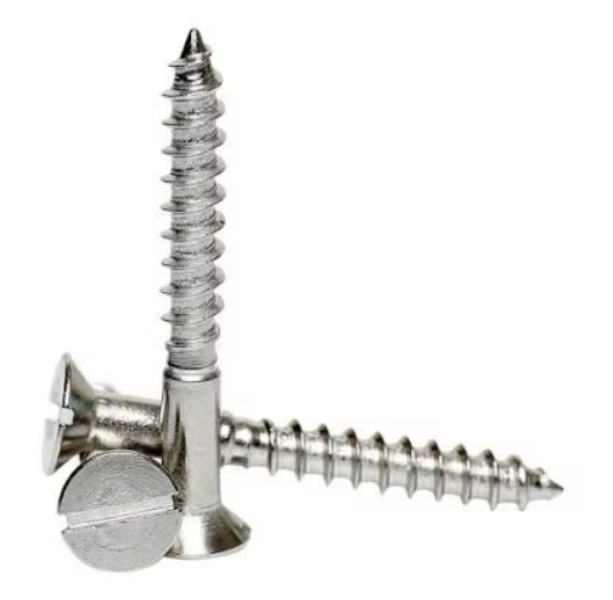
The performance of a wood screw depends on how well it matches the timber, board material, joint design, and installation method. For furniture manufacturers, interior contractors, carpenters, and procurement teams, buying screws simply by length can lead to damaged boards, poor holding, visible heads, or difficult installation.
A practical buying checklist helps ensure that the selected screw fits both the material and the finished product.
1. Identify the Material First
Start by determining what the screw will enter.
Possible materials include:
- Solid timber
- Plywood
- Engineered wood
- MDF
- Particle board
- Laminated panels
Different materials respond differently to screw threads and installation forces.
A screw that performs well in solid timber may not automatically be the ideal choice for every engineered board.
2. Determine the Required Diameter
Screw diameter affects both strength and material displacement.
A screw that is unnecessarily thick can damage delicate material or cause splitting near an edge.
A screw that is too thin may not provide sufficient holding capability for the intended joint.
The correct diameter should reflect material thickness, load, and connection design.
3. Select the Correct Length
Length should provide sufficient engagement without penetrating through the visible side.
This is particularly important in modular furniture where panels can be relatively thin.
Before ordering, calculate:
Component thickness + required penetration = appropriate screw length
Allow for countersinking or hardware thickness where applicable.
4. Review the Head Style
The screw head affects both installation and appearance.
Some applications require the head to sit flush. Others need a head that bears against brackets, hinges, or fittings.
Interior and furniture projects should also consider whether the screw will remain visible in the finished product.
5. Confirm the Drive Type
The drive must match the installation tools used by workers.
Using incompatible or worn driver bits can damage screw heads and reduce assembly speed.
High-volume manufacturers should standardize drive systems where practical to simplify tooling and operator training.
6. Check Thread Suitability
Thread geometry influences how the screw engages with wood or engineered material.
Rather than treating all wood screws as identical, buyers should select products designed for the relevant substrate and joint.
This becomes especially important in repetitive furniture production where small differences can affect thousands of assemblies.
7. Consider Pilot Drilling
Pilot holes can help control installation in certain materials and joint positions.
They are particularly useful when:
- Screwing near an edge
- Working with dense timber
- Installing larger screws
- Reducing splitting risk
- Maintaining precise positioning
Manufacturers should determine suitable pilot dimensions through engineering guidance or controlled testing.
8. Match the Finish to the Environment
Indoor furniture may have different corrosion requirements from outdoor timber installations.
Consider moisture, humidity, chemicals, and weather exposure before selecting screw material or finish.
Do not assume an indoor furniture screw will perform equally well in exterior conditions.
9. Test Before Bulk Procurement
When introducing a new screw into production, conduct an assembly trial.
Check:
- Driving behaviour
- Head seating
- Material damage
- Holding performance
- Appearance
- Tool compatibility
A small validation exercise can prevent expensive rework after bulk purchasing.
10. Evaluate Supplier Readiness
Furniture manufacturers and contractors often require multiple screw sizes.
A suitable supplier should be able to understand detailed requirements rather than treating every enquiry as a generic hardware purchase.
Provide clear information about size, material, finish, quantity, and application.
Pune has a growing ecosystem of furniture manufacturing, modular interiors, commercial fit-outs, residential projects, and industrial woodworking serving customers across Maharashtra.
Saif Nut Bolt and Hardware supplies wood screws and related fastening products for furniture, interior, manufacturing, and construction requirements in Pune.
A successful wood screw purchase starts with the material, not the catalogue. When dimensions, thread, head, drive, finish, and installation method are selected together, furniture and interior teams can achieve more predictable assembly results.